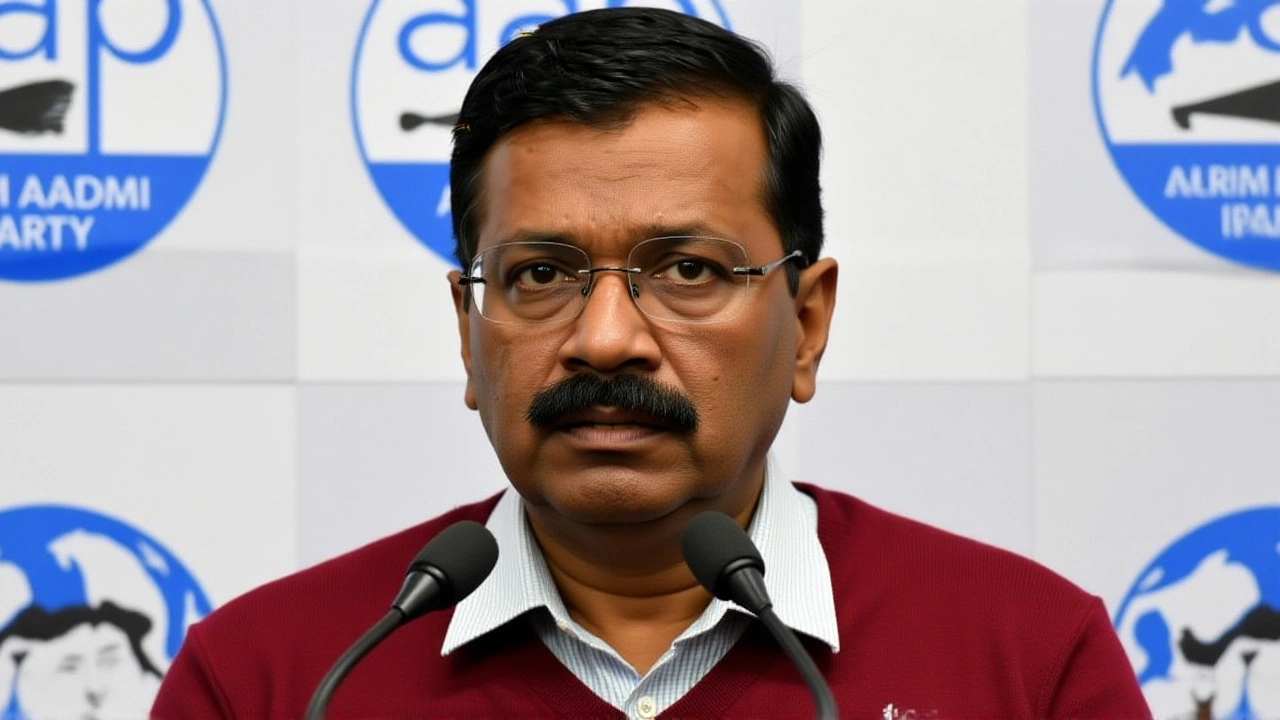
When Arvind Kejriwal, founder of the Aam Aadmi Party (AAP) and former Chief Minister of Delhi, stepped out of the polling booth in New Delhi on February 5, 2025, he likely didn't expect the seismic shift that would unfold just three days later. The results announced on February 8 didn't just change hands in power; they rewrote the political history of India's capital. For the first time in 27 years, the Bharatiya Janata Party (BJP) has stormed back to form the government in Delhi, securing a decisive majority with 48 seats out of 70.
Here’s the thing: this wasn’t just a close call. It was a landslide. In the high-stakes New Delhi constituency, Kejriwal lost to Parvesh Verma, the BJP candidate, by a margin of 4,199 votes. While the vote share gap was narrow—Verma got 48.82% compared to Kejriwal’s 42.20%—the seat tally tells a different story. The AAP, which dominated Delhi politics for a decade, slumped to 22 seats. Meanwhile, the Congress party failed to make any significant inroads, continuing its electoral drought in the capital.
The Numbers Behind the Upset
To understand why this result is so shocking, you have to look at the context. Just five years ago, in the 2020 elections, the BJP won only 8 seats. This time? They more than quintupled their presence. According to data from the Asia Network for Free Elections (ANFREL), the BJP secured 46.6% of the total vote share, while the AAP dropped to 43.6%. That’s a swing of nearly 7 percentage points in favor of the ruling party—a massive shift in voter sentiment.
Voter turnout played an interesting role here. Out of 15.5 million registered voters, only about 60.54% cast their ballots. This was the lowest turnout in 17 years, dipping 2.28 percentage points below the 2020 election. Interestingly, participation varied wildly across districts. North East Delhi saw a robust 66.25% turnout, while South East Delhi lagged behind at just 56.16%. Some analysts suggest that apathy among AAP’s core urban base may have contributed to the BJP’s rural-urban crossover success.
Kejriwal’s Personal Defeat: A Symbolic Blow
The loss of the New Delhi seat carries heavy symbolic weight. Kejriwal, who built his political identity on anti-corruption activism and grassroots governance, found himself defeated by a relatively lesser-known opponent. Parvesh Verma’s victory margin of 6.64 percentage points might seem small, but in a city where margins are often razor-thin, it signaled a clear rejection of the incumbent leadership.
"It undermines the standing of Arvind Kejriwal," notes the Institute of South Asian Studies at the National University of Singapore. "This isn't just a local defeat; it’s a blow to the AAP’s ambition to become a national party." With Kejriwal personally losing his seat, the narrative of invincibility surrounding the AAP has been shattered. His legal troubles, including multiple criminal cases, likely weighed heavily on voters’ minds, as noted in live coverage describing the party as "smarting from many criminal cases" ahead of the count.
Constituency Breakdown: Where the BJP Gained Ground
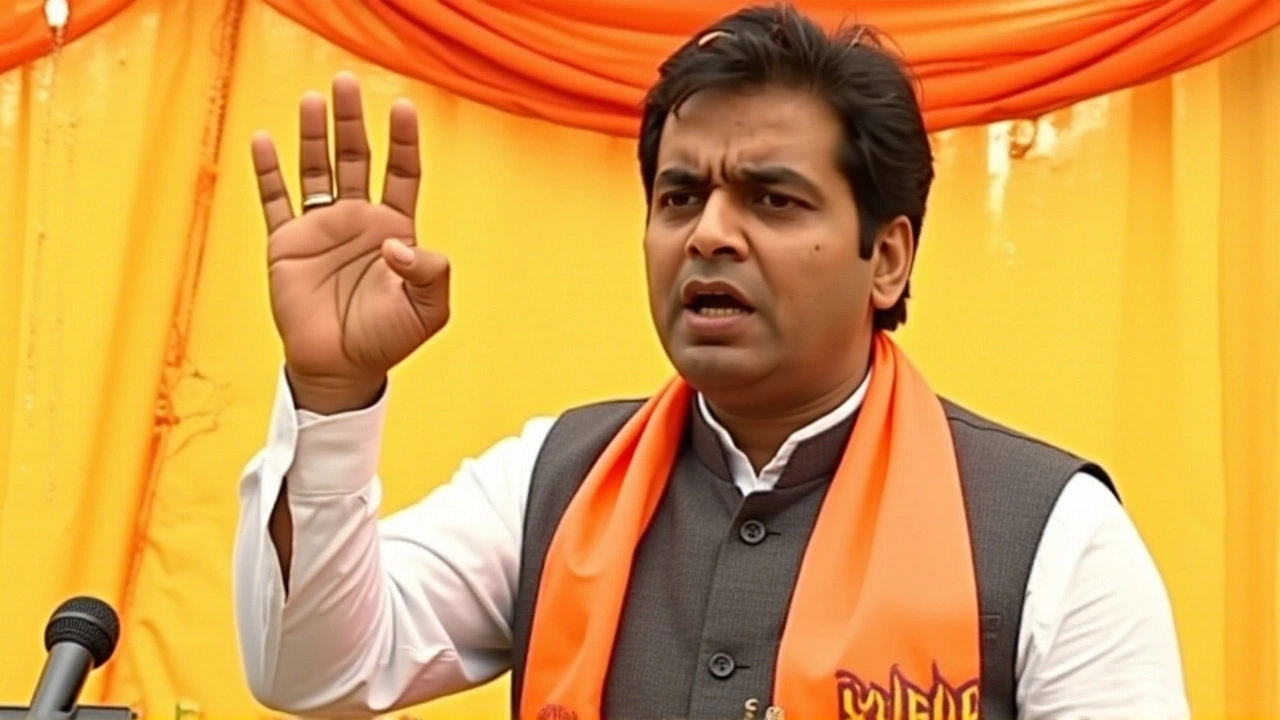
The BJP’s gains weren’t limited to one or two strongholds. They swept across diverse constituencies, demonstrating broad-based appeal. Let’s look at some key battlegrounds:
- Timarpur: Surya Prakash Khatri (BJP) edged out Surinder Pal Singh (AAP) by a mere 1,168 votes (0.96% margin). A nail-biter!
- Rithala: Kulwant Rana (BJP) dominated with 55.76% of the vote, defeating Mohinder Goyal (AAP) by a massive 29,616 votes.
- Patparganj: Ravinder Singh Negi (BJP) won with 53.41% against Awadh Ojha (AAP)’s 33.17%, a margin of over 28,000 votes.
- Krishna Nagar: Anil Goyal (BJP) secured 52.94% of the vote, beating Vikas Bagga (AAP) by 19,498 votes.
Even in areas traditionally considered AAP-friendly, like Kondli (SC), the battle was fierce. Although Kuldeep Kumar (AAP) held onto the seat with 48% of the vote, the closeness of the contest (a 6,293-vote margin) showed how vulnerable the AAP’s support base had become.
Why Did the Tide Turn?
Several factors converged to create this perfect storm for the BJP. First, the party rode the wave of momentum from its recent Lok Sabha victory. National issues, such as economic stability and security, seemed to overshadow local governance concerns for many voters. Second, the AAP’s image took a hit due to ongoing legal challenges against its top leaders. Voters, perhaps weary of uncertainty, opted for the perceived stability of the BJP.
Additionally, the BJP’s campaign strategy focused heavily on welfare schemes and development projects implemented during their brief stints in power and through central government initiatives. They effectively countered the AAP’s narrative of "common man’s government" by highlighting tangible outcomes in education and healthcare. As one voter in Shahdara put it, "We want results, not rhetoric."

What’s Next for Delhi Politics?
With the BJP crossing the majority mark of 36 seats comfortably, the next phase involves forming the government. Parvesh Verma, now the MLA from New Delhi, will likely play a key role in the new administration. However, the real question remains: How will the AAP recalibrate? Losing power after four consecutive terms is a bitter pill to swallow. The party must now introspect deeply—was it the leader-centric model that failed, or were external forces too strong?
For the Congress party, this election offers little comfort. Failing to win even a single seat reinforces their status as a distant third force in Delhi politics. Unless they undergo a radical overhaul, their relevance in the capital may continue to dwindle.
Frequently Asked Questions
Who won the New Delhi assembly seat in 2025?
Parvesh Verma of the Bharatiya Janata Party (BJP) won the New Delhi assembly seat. He defeated Arvind Kejriwal of the Aam Aadmi Party (AAP) by a margin of 4,199 votes. Verma received 30,088 votes (48.82%), while Kejriwal got 25,999 votes (42.20%).
How many seats did the BJP win in the 2025 Delhi Assembly election?
The BJP won 48 out of 70 seats in the Delhi Legislative Assembly. This gives them a comfortable majority, well above the 36-seat mark required to form the government. It is their best performance in Delhi since 1993.
What was the voter turnout in the 2025 Delhi elections?
The voter turnout was approximately 60.54%, according to ANFREL, with the Election Commission reporting a slightly lower figure of 60.42%. This was the lowest turnout in 17 years, indicating a possible sense of apathy or disillusionment among voters.
Did the Congress party win any seats in Delhi 2025?
No, the Indian National Congress failed to win any seats in the 2025 Delhi Assembly election. This continues their trend of poor performance in the capital, having also failed to secure seats in the 2015 and 2020 elections.
Why did Arvind Kejriwal lose the election?
Analysts attribute Kejriwal's loss to several factors: the BJP's strong national campaign momentum, voter fatigue regarding AAP leaders' legal troubles, and effective targeting of urban-middle-class concerns by the BJP. Additionally, the low voter turnout may have reflected dissatisfaction with the incumbent party.